- Aluminum vs. Steel Framing for Patio Covers: What’s Better for Louisiana?
- Introduction: Why Material Choice Matters More in Louisiana
- Key Takeaways
- Understanding Patio Cover Framing Systems
- Aluminum Framing: Strengths and Limitations
- Steel Framing: Strengths and Limitations
- Head-to-Head Comparison: Aluminum vs. Steel
- What Performs Better in Hurricane-Prone Areas?
- Long-Term Value for Louisiana Homeowners
- Conclusion: The Clear Winner for Louisiana Conditions
- Frequently Asked Questions
- Is aluminum or steel better for patio covers in Louisiana?
- Do aluminum patio covers hold up in hurricanes?
- Why does steel rust faster in Louisiana?
- Are aluminum patio covers strong enough?
- Which patio cover material requires less maintenance?
- Is steel ever a good choice for patio covers?
- How long does an aluminum patio cover last?
- What matters more: material or installation?
- Are insulated patio covers worth it in Louisiana?
- How do I choose the right patio cover for my home?
Aluminum vs. Steel Patio Covers: Best Framing for Louisiana Climate
Introduction: Why Material Choice Matters More in Louisiana
In Louisiana, outdoor living is part of everyday life. Many homeowners enjoy sitting outside, sharing meals, or relaxing under a covered patio. A patio cover makes that space more comfortable, even during hot summers or rainy afternoons.
But Louisiana weather is not easy on outdoor structures.
The air stays humid most of the year. Rainstorms can be strong and frequent. The sun can be harsh. During hurricane season, high winds can put a lot of stress on anything built outside.
Because of this, the materials used for your patio cover matter more than many people think.
Most homeowners focus on how a patio cover looks—its style, color, and how it fits their home. But long-term performance depends on the frame, the part you don’t see.
The frame holds everything together. It carries the weight of the roof and helps the structure stand strong during wind and rain.
When it comes to framing, most patio covers are built using either aluminum or steel.
Both materials are strong and widely used, but they do not perform the same way in Louisiana’s climate. One may last longer and require less work over time.
If you are planning to add a patio cover, it helps to understand how these materials compare before making a decision.
Key Takeaways
- Louisiana’s climate demands durable materials. High humidity, heavy rain, and hurricane winds put constant stress on patio cover structures.
- The framing matters more than the appearance. What supports the patio cover determines how long it lasts and how well it performs.
- Aluminum resists rust and requires little maintenance. It holds up well in humid environments and does not need ongoing treatment.
- Steel is strong but more vulnerable to moisture. Over time, rust can develop and weaken the structure if not maintained.
- Both materials can meet wind requirements when properly installed. Design and installation quality matter more than the material alone.
- Aluminum offers better long-term value for most homeowners. Lower maintenance and consistent performance reduce overall cost and effort.
- Steel may be useful for large or custom designs. But for typical residential patio covers, it often requires more upkeep.
- Hurricane performance depends on structure condition over time. Materials that resist deterioration maintain their strength longer.
- Choosing the right contractor is just as important as choosing the material. Proper installation ensures the patio cover performs as intended.
Understanding Patio Cover Framing Systems
When you look at a patio cover, you usually notice the roof panels and the finished design. What you don’t see is the structure behind it.
The framing supports the entire system. It holds up the roof, spreads out the weight, and helps the patio cover stay stable during storms.
Every time strong winds hit or heavy rain falls, the frame is doing the work.
Many patio covers today also use insulated roof panels. These panels help keep the space cooler and reduce heat from the sun. They also add weight, which means the frame must be strong and stable.
That’s why choosing the right framing material is so important.
Aluminum and steel are the two most common materials used for patio covers. Both can do the job, but they react differently to heat, moisture, and time.
For homeowners looking into patio covers New Orleans, understanding how these materials perform can help you choose a structure that lasts.
Aluminum Framing: Strengths and Limitations
Aluminum is widely used for residential patio covers, especially in areas with high humidity.
One of the biggest reasons is simple—it does not rust.
In Louisiana, moisture is always in the air. Even when it’s not raining, humidity can affect materials over time. Steel and other metals can slowly break down in this environment. Aluminum behaves differently.
It forms a thin protective layer on its surface. This layer helps protect it from damage caused by moisture. Because of this, aluminum can hold up well in both inland and coastal areas.
Another advantage of aluminum is its weight.
It is much lighter than steel, which makes it easier to install. This can reduce installation time and limit stress on the slab or foundation below.
Even though aluminum is lighter, it is still strong enough for most residential patio covers. Modern systems are designed to meet building codes, including wind-resistance requirements.
When installed correctly, aluminum framing can handle the conditions found in Louisiana.
Maintenance is another area where aluminum stands out.
Once installed, it does not require much attention. There is no need to repaint or treat it to prevent rust. This makes it a good choice for homeowners who want a long-lasting structure without ongoing work.
Aluminum also works well with systems like an insulated patio cover. These systems are designed to improve comfort by reducing heat, and aluminum supports them without adding extra maintenance concerns.
There are some limits to aluminum. Steel is stronger when it comes to very large spans or heavy loads. Some homeowners also feel more comfortable with heavier materials.
However, for most homes, aluminum provides the strength needed while offering better long-term performance.
Steel Framing: Strengths and Limitations
Steel is known for its strength and is used in many types of construction.
For patio covers, it can provide a solid and firm structure. It does not bend easily and can support larger spans than aluminum. This can be useful for certain custom designs.
However, steel has one major weakness in Louisiana—rust.
Even when steel is coated or treated, it can still be affected by moisture. Over time, exposure to humidity can cause the surface to break down. Areas like joints and fasteners are often the first to show signs of wear.
Once rust starts, it spreads.
At first, it may look like a small issue. But if it is not addressed, it can weaken parts of the structure. This is why steel requires maintenance.
Homeowners may need to check for rust, repaint certain areas, or repair parts of the frame. Over time, this adds both cost and effort.
Imagine a patio cover that looks great when it is first installed. After a few years, small rust spots begin to appear. If they are not taken care of, they can grow and affect the strength of the structure.
Steel is also heavier than aluminum. This can make installation more difficult and may require more support, depending on the design.
Steel can still be a good option for certain projects. But in a humid climate like Louisiana, it often needs more attention over time.
Head-to-Head Comparison: Aluminum vs. Steel
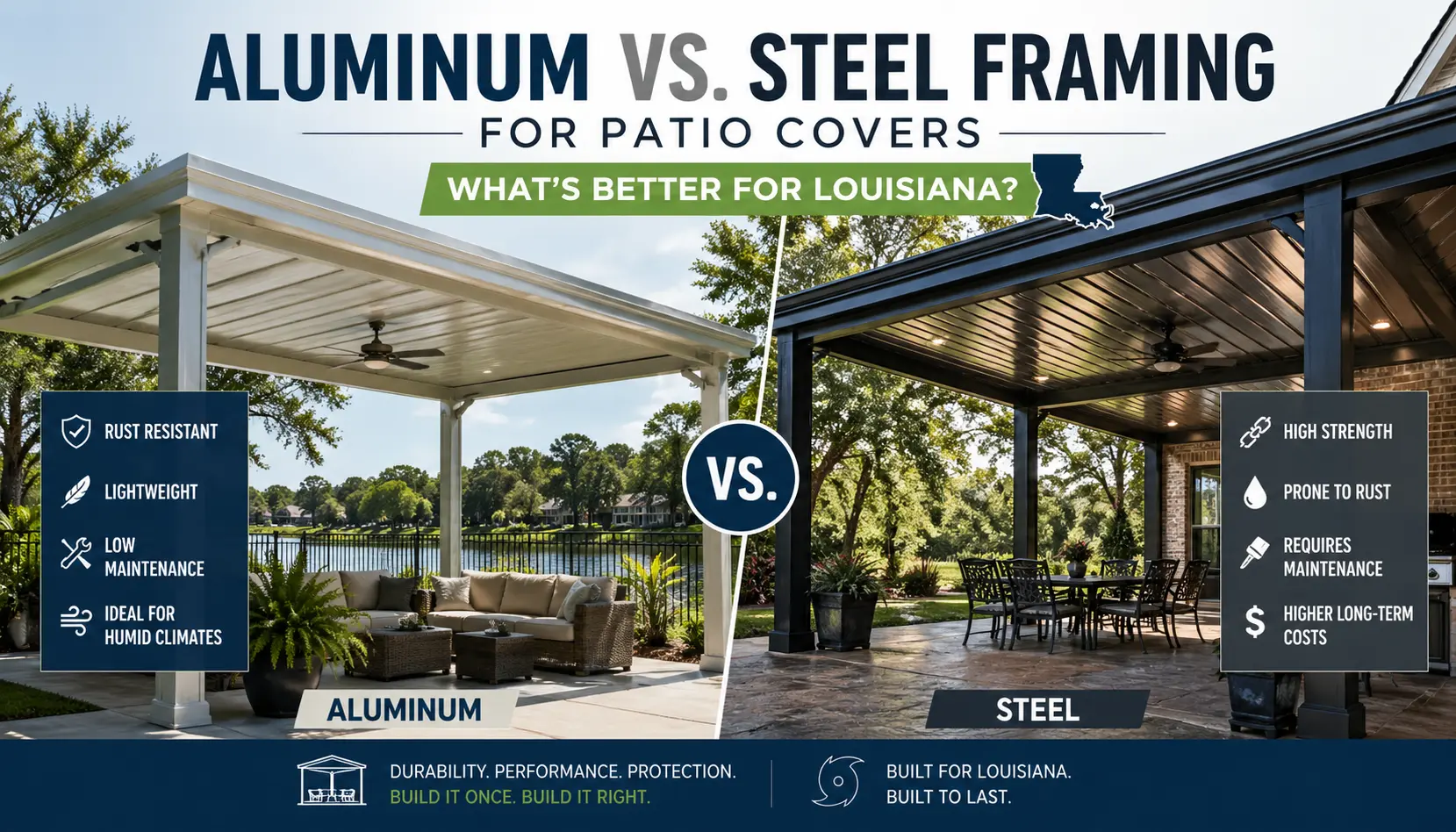
When comparing aluminum and steel, the biggest differences show up over time.
Aluminum handles moisture well. It does not rust, so it keeps its strength without much upkeep. Steel is strong at first but can weaken if rust develops.
Wind resistance is important for any patio cover in Louisiana. Both materials can be used to meet wind requirements, but performance depends more on design and installation than on material alone.
This is especially important when building a hurricane resistant patio cover. A well-built structure will perform better than one that is not properly installed.
Maintenance is another major difference.
Aluminum requires very little care. Steel needs regular attention to prevent rust and damage.
Installation also varies. Aluminum is easier to handle and faster to install. Steel is heavier and may take more time and labor.
Over time, these differences can affect both cost and convenience.
What Performs Better in Hurricane-Prone Areas?
Hurricanes are a serious concern for Louisiana homeowners. Strong winds can put a lot of stress on outdoor structures.
Some people assume the strongest material will always perform best. In reality, the way the patio cover is built matters more.
A structure that is properly designed and anchored will perform better than one that is not, regardless of the material used.
Still, the condition of the material over time plays a role.
Aluminum stays consistent because it does not rust. Years after installation, it performs much like it did in the beginning.
Steel can change over time. If rust develops in important areas, it can weaken connections that are needed during high winds.
Think about two patio covers built at the same time. One is aluminum, and the other is steel. After years of exposure to Louisiana weather, the aluminum frame stays in good condition. The steel frame may show signs of wear.
During a strong storm, those differences can affect how the structure holds up.
Long-Term Value for Louisiana Homeowners
When choosing a patio cover, it helps to think about long-term value.
Aluminum may cost more at the start in some cases, but it often saves money over time. It does not need regular maintenance, which reduces future costs.
Steel may cost less upfront, but maintenance can add up over the years.
Appearance is also important. A patio cover that stays in good condition helps your home look well cared for. Aluminum tends to hold its appearance longer because it does not rust.
For many homeowners, reliability matters just as much as cost. A structure that performs well without constant attention is easier to own and maintain.
Conclusion: The Clear Winner for Louisiana Conditions
Both aluminum and steel can be used to build patio covers, and each has its strengths. But in Louisiana, the climate changes how those materials perform over time.
Aluminum stands out because it does not rust, requires very little maintenance, and continues to perform year after year. Steel offers strength, but it needs more upkeep and is more likely to be affected by moisture in the air.
For most homeowners, aluminum provides a more reliable and practical solution.
Choosing the right material is only one part of the process. The way your patio cover is designed and installed also plays a big role in how well it performs.
At Capital Improvement, we build patio covers that are made to handle Louisiana’s climate and provide long-term value.
When You Hire Us, We’ll Be There!
Visit https://www.capitalimprovement.com/contact/ or call us at 504-733-5722 to schedule your consultation with the Capital Improvement team today.
Frequently Asked Questions
Is aluminum or steel better for patio covers in Louisiana?
Aluminum is usually the better choice for Louisiana homes. It does not rust, handles humidity well, and requires very little maintenance. Steel is strong, but it can develop rust over time in moist conditions.
Do aluminum patio covers hold up in hurricanes?
Yes, aluminum patio covers can perform well in hurricanes when they are properly designed and installed. The strength of the structure depends more on how it is built and anchored than the material alone.
Why does steel rust faster in Louisiana?
Louisiana has high humidity and frequent rain. Moisture stays in the air and on surfaces, which can cause steel to break down over time. Even coated steel can start to rust, especially at joints and fasteners.
Are aluminum patio covers strong enough?
Yes, aluminum patio covers are strong enough for most residential homes. Modern systems are built to meet building codes, including wind resistance requirements.
Which patio cover material requires less maintenance?
Aluminum requires less maintenance. It does not need repainting or treatment to prevent rust. Steel, on the other hand, may need regular upkeep to protect it from moisture.
Is steel ever a good choice for patio covers?
Steel can be a good choice for large or custom patio covers that need extra support. However, in Louisiana, it usually requires more maintenance over time due to moisture.
How long does an aluminum patio cover last?
An aluminum patio cover can last many years with little upkeep. Because it does not rust, it keeps its strength and appearance longer than materials that are affected by moisture.
What matters more: material or installation?
Installation matters more. A properly designed and installed patio cover will perform better than one that is not, no matter what material is used.
Are insulated patio covers worth it in Louisiana?
Yes, insulated patio covers can help reduce heat and make outdoor spaces more comfortable. They work especially well in hot climates like Louisiana.
How do I choose the right patio cover for my home?
Start by choosing a material that can handle Louisiana’s climate. Then work with an experienced contractor who understands local weather conditions and building requirements.
This article is a collaboration between Capital Improvement and OpenAI’s ChatGPT. Created on April 05, 2026, it combines AI-generated draft material with Capital Improvement’s expert revision and oversight, ensuring accuracy and relevance while addressing any AI limitations.
Recommended Reading:
1. “Corrosion of Structural Steel in Coastal Environments”
This article explores how salt air and humidity accelerate corrosion in steel structures, offering valuable insight into long-term material performance in coastal regions like Louisiana.
URL:https://www.azom.com/article.aspx?ArticleID=17112
2. “Aluminum vs. Steel: Strength, Weight, and Cost Comparison”
A technical comparison of aluminum and steel that breaks down differences in strength-to-weight ratio, corrosion resistance, and lifecycle costs—helpful for professionals evaluating material selection beyond surface-level traits.
URL:https://www.matmatch.com/resources/blog/aluminum-vs-steel/
3. “Designing for Wind: Residential Structures in Hurricane-Prone Regions”
This resource outlines key engineering principles for wind resistance, including load paths and anchoring strategies, which are critical when evaluating patio cover framing systems in storm-prone areas.
URL:https://www.fema.gov/sites/default/files/documents/fema_p-499-home-builder-guide-coastal-construction.pdf