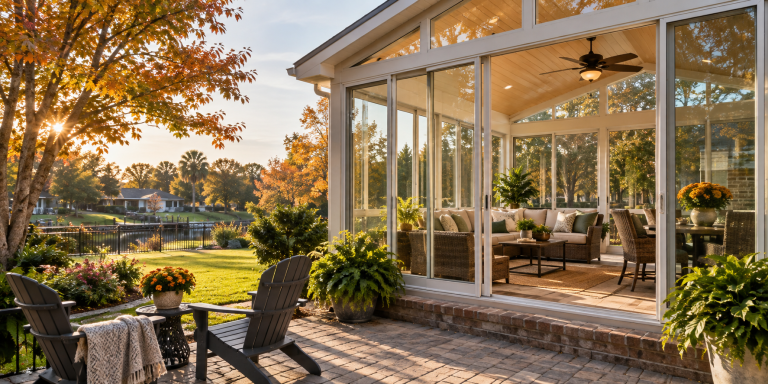

A sunroom can be a wonderful addition—but only if it fits the way you actually plan to live.
That is especially true in retirement.
For many years, your home may have revolved around work, school, errands, and family life. Mornings were often rushed. Evenings were busy. Weekends filled up fast. You may have spent more time getting things done than simply enjoying your home.
Retirement can change that.
You may have more time for a slow cup of coffee in the morning. You may read more, work on hobbies, visit with friends, or spend time with your children and grandchildren. You may also begin to notice parts of your home and yard in a new way.
Maybe you have a backyard you enjoy looking at, but you do not spend much time outside because of the heat, humidity, rain, or insects. Maybe you like the idea of sitting outdoors, but you want more comfort and protection. Or maybe you simply want another place to relax at home.
That is often where the idea of a sunroom begins.
Still, retirement alone is not a reason to build one.
A sunroom is a major change to your home. It should fit your daily habits, your property, your plans, and the way you hope to live for years to come.
Before you begin comparing designs or looking at custom sunrooms, take some time to think about your real life.
Table of Contents: Essential Questions for Your Sunroom Decision
- Key Takeaways
- 1. How Often Would We Really Use the Room?
- 2. What Time of Day Would We Use It?
- 3. Do We Entertain Family and Friends Often?
- 4. Do We Want More Indoor Space or More of an Outdoor Feel?
- 5. Where Could a Sunroom Fit Naturally With Our Home?
- 6. How Much Upkeep Do We Want in Retirement?
- 7. Do We Plan to Stay in This Home for Many Years?
- Conclusion: Build for the Retirement You Plan to Live
- Frequently Asked Questions About Sunrooms and Retirement
- Is a sunroom a good idea for retirement?
- How do I know if I will actually use a sunroom?
- Should I choose a sunroom or a more outdoor-style living space?
- Where is the best place to put a sunroom?
- Does the time of day matter when planning a sunroom?
- Can a sunroom provide more space for family gatherings?
- How much upkeep does a sunroom require?
- Should I build a sunroom if I may move soon?
- What should I discuss with a sunroom contractor?
- Recommended Reading
Key Takeaways
- A sunroom makes the most sense when it supports activities you already enjoy, such as morning coffee, reading, hobbies, family visits, or enjoying your backyard.
- Think about when you will use the room. Morning and afternoon sunlight can create very different experiences depending on the location of your home and the room.
- If children, grandchildren, or friends visit often, a sunroom may provide another comfortable gathering space without changing how you use the rest of your home.
- Decide whether you want a more enclosed, indoor-feeling space or an area that keeps more of the feeling of being outdoors. A sunroom is not always the right choice for every homeowner.
- The location of the sunroom matters. It should connect naturally with your home, your yard, and the rooms you already use most often.
- Think about cleaning and routine upkeep before making a decision, especially if one of your retirement goals is to spend less time taking care of your home.
- Consider how long you expect to remain in your home. For long-term homeowners, the value of a sunroom can include years of personal enjoyment, family time, and everyday use.
These seven questions can help you decide whether a sunroom makes sense for your retirement.
1. How Often Would We Really Use the Room?
This is the best place to start.
It is easy to imagine a beautiful sunroom with comfortable chairs, natural light, and a pleasant view of the yard. It may look like the perfect place to relax.
But try to go one step further.
What would you actually do there on a normal day?
Think about the habits you already have.
Where do you drink your morning coffee now? Where do you read? Where do you sit when you want some quiet time? Do you already spend time near the patio or backyard? Do you often look outside and wish you had a better place to enjoy the view?
Those questions can tell you more than a picture in a brochure.
Suppose a retired couple has lived in the same home for 30 years. Every morning, they sit at the kitchen table with coffee. One reads the news while the other works on a puzzle. Their kitchen is comfortable, but the table faces an interior wall. Just outside is a backyard they have spent years caring for.
For them, a sunroom could fit into a habit they already enjoy. They would not need to create a new routine. They would simply move that morning routine into a room with a better view.
Now think about another couple.
They plan to travel often after retirement. When they are home, they golf, volunteer, visit friends, and spend weekends with family. They may like the look of a sunroom, but they may not be home enough to use it very often.
Neither couple is making a bad choice.
Their lives are simply different.
Try naming three things you would do in the room every week.
Would you drink coffee there?
Read?
Work on a hobby?
Have lunch?
Talk with friends?
Spend time with grandchildren?
Watch the rain without having to go back inside?
If you can quickly think of several uses, that may be a good sign.
If you are not sure what you would do there, that is useful to know too.
A room that becomes part of your daily life may be worth much more to you than one that looks nice but is rarely used.
2. What Time of Day Would We Use It?
The next question is simple.
When would you use the room?
That matters because light changes throughout the day.
A backyard can feel very different at 8:00 in the morning than it does at 4:00 in the afternoon. The sun moves. Shadows change. Trees and nearby homes can block or soften the light.
Your own routine matters too.
Maybe you wake up early even though you no longer have to go to work. You enjoy coffee, the newspaper, and a quiet start to the day.
If that sounds like you, morning light may matter a great deal.
Another homeowner may have a different routine. Mornings may be for errands, exercise, appointments, or golf. That person may spend more time at home later in the day.
Their sunroom would serve a different part of daily life.
This is why it helps to think beyond, “What should our sunroom look like?”
A better question may be, “When are we most likely to sit in it?”
You may find that your answer is very clear.
“We would use it every morning.”
“We would probably be there after lunch.”
“We would mostly use it when the family comes over in the afternoon.”
Those answers help shape a better plan.
A photo can show you a room that looks attractive. It cannot tell you whether that room works well with your home, your yard, and your daily routine.
The more clearly you know when you will use the room, the easier it becomes to plan a space that fits your life.
3. Do We Entertain Family and Friends Often?
Retirement can also change the way your home is used by family and friends.
Your children may now have homes of their own. You may have grandchildren. Friends may have more free time too.
Your house may become a gathering place again.
There may be Sunday lunches, birthday visits, holidays, card games, coffee with friends, or afternoons with the grandchildren.
When more people come over, your home can feel different.
A living room that feels fine for two people may feel crowded when eight people arrive. A kitchen table that works well every day may suddenly feel too small during a holiday meal.
That does not always mean you need a larger home.
You may simply want another place where people can gather.
Think about a family lunch.
After everyone eats, some people may move to the living room. Others may want to keep talking at the table. The grandchildren may want their own space.
A sunroom could give the family another place to sit, talk, play a game, or enjoy coffee.
Still, it is worth being honest about how often this happens.
If your children and grandchildren live nearby and visit every week, extra gathering space may matter a great deal.
If your family lives far away and most of your social time happens outside the home, entertaining may not be a major reason to build.
Ask yourself this:
Who is the room really for?
Is it mainly for you?
Mainly for family and guests?
Or both?
There is no wrong answer.
A quiet room for two people during the week might also become a family gathering space on Sunday.
The answer helps you think about how the room should work.
It can affect how large it needs to be, how people move through it, and how well it connects with the rest of the house.
4. Do We Want More Indoor Space or More of an Outdoor Feel?
Many homeowners say the same thing when they start thinking about a sunroom.
“We want to enjoy the backyard more.”
That makes sense, but it can mean different things to different people.
Some people want a room that feels close to the inside of the home. They want comfort, plenty of natural light, and a strong view of the yard.
Others want more of an outdoor feel.
They want to hear birds, feel a breeze, and stay connected to the sounds and feel of being outside.
Think about what you enjoy most.
Imagine a warm Louisiana afternoon.
Would you rather sit in a comfortable chair in a more enclosed space while looking out at the yard?
Or would you rather feel more connected to the air and sounds outside?
Now think about a spring morning.
What about a rainy afternoon?
What about an evening when insects would usually push you indoors?
Your answers can help you decide what kind of space fits you best.
You may find that you truly want a sunroom.
You may also find that a screen room or covered outdoor area fits your needs better.
That is not a bad result.
The goal is not to choose the biggest project.
The goal is to choose the space you will enjoy using.
This matters even more in retirement because you may use the room many days each week.
You are not only thinking about a Saturday afternoon once in a while.
You may be thinking about Tuesday morning, Wednesday afternoon, Friday evening, and Sunday with the family.
The more often you plan to use the room, the more important it is to choose the kind of space that feels right to you.
5. Where Could a Sunroom Fit Naturally With Our Home?
Once you know how you want to use the room, look at your house.
Where would the sunroom go?
Start inside.
Walk through the rooms where you spend the most time.
Look at the doors that lead to the backyard.
Would you want to enter the sunroom from the living room? From the kitchen? From another area?
Then go outside and look back at the house.
Where is the patio?
Which part of the yard has the best view?
Where do you already spend time?
Which areas do you almost never use?
Sometimes the best location is easy to spot.
Maybe you have a patio right outside the living room. You rarely sit there because the weather makes it hard to enjoy, but you like looking at that part of the yard.
That could be a natural place to explore.
Another area might have more open space but be harder to reach from inside the house.
It might look good on paper but feel awkward in daily life.
That matters.
A room that is easy to reach is more likely to become part of your routine.
A room that feels cut off from the rest of the house may be used less often.
You do not need to solve every detail on your own.
Once you have a general idea of where the room could go, you may decide it is time to speak with a sunroom contractor near me who can look at your home and talk about what may work.
You do not need to arrive with a full plan.
It is more helpful to know what you want the room to do and where it seems to fit into your daily life.
6. How Much Upkeep Do We Want in Retirement?
Retirement often comes with a desire for more freedom.
You may want more time to travel, visit family, enjoy hobbies, or simply relax.
That makes upkeep worth thinking about.
Ask yourself this:
How much time do we want to spend taking care of our home?
Every room needs some care.
A sunroom will need normal cleaning. Furniture will need attention. Pollen, dust, leaves, and outdoor dirt can still collect around the space.
Your yard can affect this too.
A home with many trees may require more cleanup around the room than a more open yard.
Some homeowners do not mind that.
They enjoy gardening and caring for the property. They may spend several mornings a week outside and enjoy doing it.
Others feel very differently.
After years of taking care of a house, they want fewer chores.
They want to leave for a trip, visit family, or spend a few weeks away without coming home to a long list of work.
Both choices are normal.
What matters is knowing which one sounds more like you.
When you start talking with sunroom companies, ask about the normal care that comes with the materials and room design being discussed.
Do not focus only on how the finished room will look.
Think about how much work it may add to your life.
A room should fit your retirement goals in more than one way. It should be a place you enjoy without creating more upkeep than you want.
7. Do We Plan to Stay in This Home for Many Years?
The final question may be the most personal one.
Is this the home where you expect to spend your retirement?
For some homeowners, the answer is easy.
They have lived in the same neighborhood for many years. They know the neighbors. Their children or grandchildren may live nearby. They like their church, doctors, grocery store, and familiar routines.
The house is more than a building.
It is home.
Other people see retirement as a time to move.
Maybe they want to be closer to family.
Maybe they want a smaller home.
Maybe they plan to move to another city or state.
That difference can change the way you think about a sunroom.
Imagine one homeowner who plans to move in two years.
Now imagine another who plans to stay in the same home for another 15 years.
The same sunroom could have very different value to those two people.
That is because value is not only about what happens when you sell a house.
It is also about how much you enjoy the space while you live there.
If you sit in the sunroom four mornings a week for the next 15 years, that is a lot of mornings.
If your grandchildren spend Sunday afternoons there, those visits add up.
If the room helps you enjoy a backyard you have cared for over many years, you receive something from it every time you sit down and enjoy the view.
That kind of value is personal.
It is not a promise about what your home may sell for later.
It is about how much the room adds to the years you spend there.
So think beyond next year.
Can you see yourself living in this home five years from now?
Ten years from now?
Fifteen?
Does the rest of the house still work for you?
Is family nearby?
Do you still like the neighborhood?
Do you truly want to stay?
Then ask one more question:
If we build this room, can we see ourselves still enjoying it many years from now?
If the answer is yes, that may tell you a lot.
Conclusion: Build for the Retirement You Plan to Live
A sunroom can become a place for morning coffee, reading, hobbies, family visits, quiet afternoons, and time spent enjoying the backyard.
But it only makes sense if it fits your life.
That is why the best decision starts with a few practical questions.
Will you use the room often?
What time of day will you use it?
Will family and friends spend time there?
Do you want more of an indoor feel or more of an outdoor feel?
Where would the room fit best with your home?
How much upkeep do you want?
And how long do you plan to stay in the house?
You do not need a perfect answer to every question.
What matters is that you think about how the room would fit into the life you really expect to live.
A sunroom should not be added simply because it looks nice in a photo.
It should make sense for your daily routine, your property, and your future plans.
If you keep coming back to the same idea—that you would use the room often, enjoy it with family, and value it for many years—then it may be time to talk about what is possible for your home.
Capital Improvement can help you discuss your options and decide whether a custom sunroom fits your property and your retirement plans.
When You Hire Us, We’ll Be There!
Visit Capital Improvement or call 504-733-5722 to schedule your consultation with Capital Improvement.
Frequently Asked Questions About Sunrooms and Retirement
Is a sunroom a good idea for retirement?
A sunroom can be a good choice if you expect to use it regularly and plan to remain in your home for many years. The decision should be based on your daily habits, how you enjoy spending your time, your property, and your long-term plans rather than retirement alone.
How do I know if I will actually use a sunroom?
Think about activities you already enjoy at home. If you can name several things you would realistically do in the room each week—such as drinking coffee, reading, enjoying a hobby, visiting with family, or looking out at the yard—the room may fit naturally into your routine.
Should I choose a sunroom or a more outdoor-style living space?
Start by deciding how you want the space to feel. If you want a more enclosed area with a strong visual connection to your yard, a sunroom may be a better fit. If feeling the breeze and maintaining more of an outdoor atmosphere are priorities, a screen room or covered outdoor space may be worth considering.
Where is the best place to put a sunroom?
The best location depends on your home’s layout, yard, existing access points, sunlight, and how you plan to use the room. A location that connects naturally with a frequently used living area may be more convenient than an area that offers more space but feels separated from the rest of the home.
Does the time of day matter when planning a sunroom?
Yes. The amount and direction of sunlight change during the day. Think about whether you expect to use the room mainly in the morning, afternoon, or evening. That information can help guide decisions about placement and room design.
Can a sunroom provide more space for family gatherings?
It can. For homeowners who regularly host children, grandchildren, or friends, a sunroom can provide another place to sit, talk, play games, or spend time together. How valuable that extra space will be depends on how often you entertain and how your existing rooms function during gatherings.
How much upkeep does a sunroom require?
A sunroom requires normal cleaning and care like other parts of a home. The property can also affect upkeep. Trees, landscaping, pollen, leaves, and other outdoor conditions may influence how often the surrounding area needs attention. Ask about expected care when discussing your project.
Should I build a sunroom if I may move soon?
Your expected time in the home should be part of the decision. Someone who expects to move within a few years may view the project differently from someone planning to stay for another 10 or 15 years. Consider how much personal use and enjoyment you expect to receive from the room while you live there.
What should I discuss with a sunroom contractor?
Explain how often you expect to use the room, what time of day you will use it, who will use it, where you think it could fit, and how long you plan to remain in the home. Those details can provide a better starting point than choosing a room based only on a photograph.
This article is a collaboration between Capital Improvement and OpenAI’s ChatGPT. Created on Sept 02, 2026, it combines AI-generated draft material with Capital Improvement’s expert revision and oversight, ensuring accuracy and relevance while addressing any AI limitations.
Recommended Reading
1. Housing America’s Older Adults 2023 — Harvard Joint Center for Housing Studies
This research examines the housing needs, financial conditions, accessibility concerns, and living arrangements of America’s growing older population. For remodeling and home-improvement professionals, it provides useful context for understanding why long-term usability and the ability to remain at home are becoming increasingly important parts of residential improvement decisions.
Read: https://www.jchs.harvard.edu/housing-americas-older-adults-2023
2. Aging in Place: Growing Older at Home — National Institute on Aging
The National Institute on Aging examines the practical issues older adults face when deciding whether they can remain safely and comfortably in their current homes. The resource is useful for industry professionals because it places individual home-improvement decisions within the broader questions of long-term housing, daily activities, support needs, and planning for later life.
Read: https://www.nia.nih.gov/health/aging-place/aging-place-growing-older-home
3. AARP HomeFit Guide — AARP
AARP’s HomeFit program examines how residential design and home modifications can support people as their needs change over time. For remodeling and design professionals, it offers a useful framework for thinking beyond the immediate project and considering comfort, usability, mobility, and long-term use of the home.
Read: https://www.aarp.org/livable-communities/housing/info-2020/homefit-guide.html