Thinking about adding a patio cover, screen room, or sunroom to your home? Many homeowners across Louisiana—especially in Metairie and the New Orleans area—are upgrading their outdoor spaces for comfort and convenience. Whether you want more shade, protection from bugs, or a relaxing place to enjoy the outdoors, these projects can improve how you use your home.
Before you start building, though, there’s one important step: making sure you have the right permit.
Permits are official approvals from your city or parish. They confirm that your project follows building rules and safety codes. At Capital Improvement, “When You Hire Us, We’ll Be There!”—and that includes helping you understand the permit process from beginning to end.
Table of Contents
- Key Takeaways: What You Need to Know About Permits for Patio Covers, Sunrooms & Screen Rooms in Louisiana
- Why Permits Matter
- When Do You Need a Permit?
- Who Issues Permits in Louisiana?
- What Types of Projects Need Permits?
- What Documents Are Needed for a Permit?
- How Much Does a Permit Cost?
- What Happens If You Skip the Permit?
- How Long Does the Permit Process Take?
- Conclusion
- Frequently Asked Questions (FAQs)
- Do I really need a permit for a patio cover in Louisiana?
- What happens if I build without a permit?
- How much does a building permit cost for these types of projects?
- How long does it take to get a permit approved?
- Do sunrooms need a permit even if they’re not air-conditioned?
- Does Capital Improvement help with the permitting process?
- Does Capital Improvement do repairs or modify existing structures?
- Do I need HOA approval for my project?
Key Takeaways: What You Need to Know About Permits for Patio Covers, Sunrooms & Screen Rooms in Louisiana
- Most outdoor structures require permits in Louisiana, especially if they are attached to your home, have a roof, or are permanently installed.
- Permits are issued by local governments—including Jefferson, Orleans, St. Tammany, and St. Charles Parishes—not by HOAs (though HOA approval may still be required).
- Patio covers, screen rooms, and sunrooms each have specific requirements, such as site plans, wind load certifications, and structural drawings.
- All sunrooms require permits, even if they are not climate-controlled. Conditioned sunrooms often need additional electrical and HVAC permits.
- Skipping a permit can lead to fines, stop-work orders, insurance problems, and delays when selling your home.
- Permit costs vary, typically ranging from $50 to $600 depending on the type and size of the project.
- Capital Improvement handles the entire permitting process—including drawings, submissions, and inspections—for every project we install.
- We specialize only in new installations, do not offer repairs, and do not use knee walls in screen or sunroom construction.
- Permits are not just paperwork—they ensure your structure is safe, legal, and built to last in Louisiana’s challenging climate.
Why Permits Matter
Permits protect your project—and your property. Louisiana weather can be tough, with strong winds, heavy rain, and hurricanes. A permitted structure must meet safety standards that help it stand up to these conditions.
Permits also protect your wallet. If you build without one, you could face fines, insurance issues, or problems when it’s time to sell your home. Getting a permit now helps avoid bigger problems later.
When Do You Need a Permit?
Here’s an easy way to remember it:
If your structure is permanent, attached to your home, or has a roof, it most likely needs a permit.
This includes:
- Patio covers (attached or freestanding)
- Screen rooms (with roofs or connected to the home)
- Sunrooms (with or without air conditioning)
Even small projects can need a permit depending on size, location, or zoning rules. Just because a neighbor didn’t get one doesn’t mean you won’t need to. Every situation is different, and it’s not worth the risk.
Who Issues Permits in Louisiana?
Permits come from your local city or parish government. Common offices in Southeast Louisiana include:
- Jefferson Parish (Metairie, Kenner, and surrounding areas)
- Orleans Parish (New Orleans)
- St. Tammany Parish (Slidell, Mandeville, Covington)
- St. Charles Parish
If you live in a neighborhood with a Homeowners Association (HOA), you may also need their approval. Just remember, HOA approval doesn’t replace the need for a city or parish permit—you may need both.
What Types of Projects Need Permits?
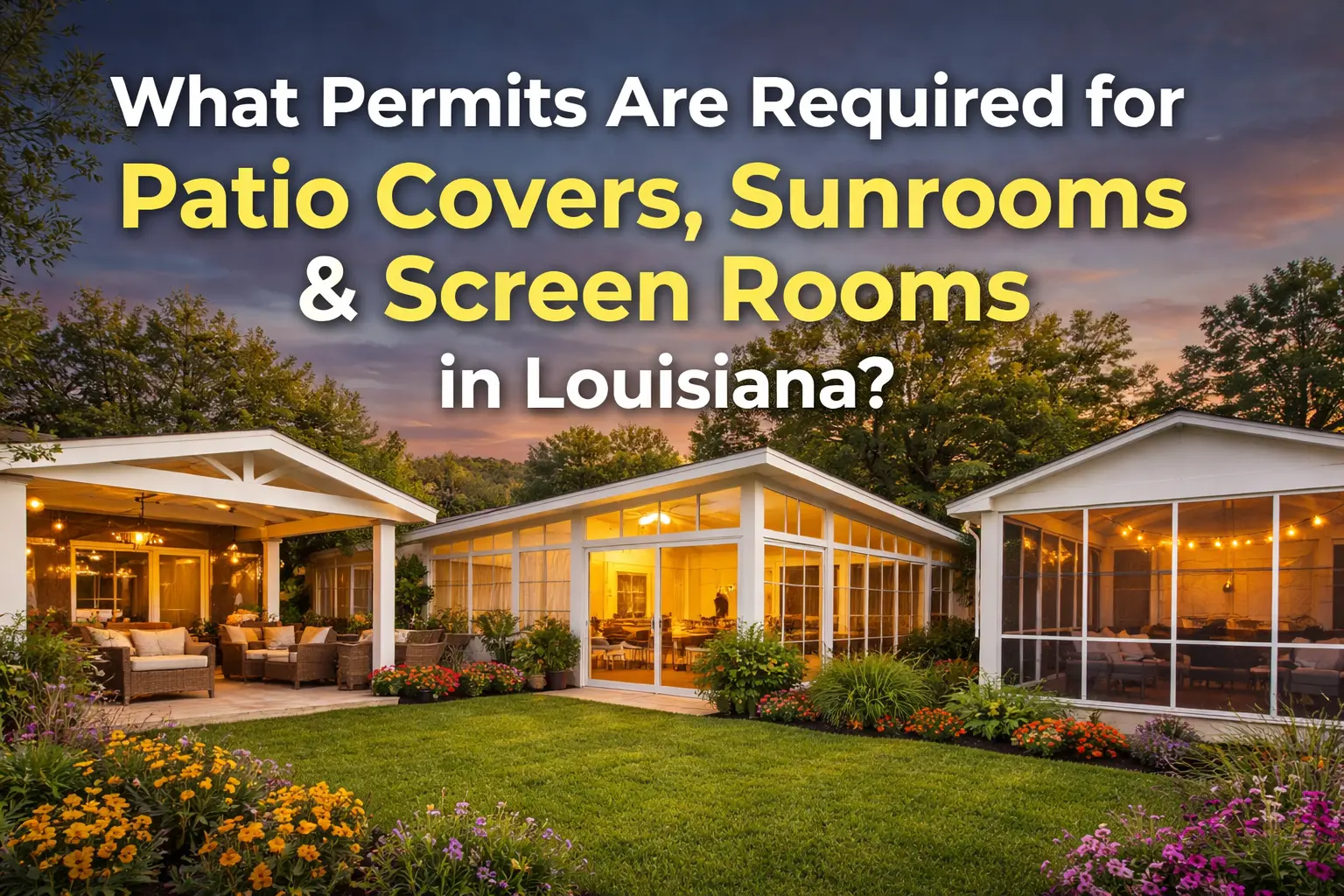
Let’s look at the most common outdoor living projects Capital Improvement installs—and what each one usually requires.
Patio Covers
Patio covers provide shade and shelter, helping you enjoy your backyard even in hot or rainy weather. They can be connected to your house or freestanding in the yard.
If the cover is attached to your house, it almost always requires a permit. Freestanding covers may also need one, especially if they’re large or close to a fence or other structure.
Most cities or parishes will ask for:
- A site plan showing where the cover will go
- A drawing or sketch of the structure
- Proof that the cover can handle wind loads (especially in hurricane zones)
Example:
A homeowner in Metairie wants a 10×20 aluminum patio cover connected to their home. Since it’s large and attached, they’ll need a permit from Jefferson Parish. The drawings must show how it meets wind safety requirements.
Learn more about our patio cover installers near you.
Screen Rooms
A screen room is like a porch with walls made of screens. It protects you from insects and rain while still letting in fresh air. Most screen rooms have a roof, and many are built on a concrete slab.
You’ll probably need a permit if:
- The screen room has a roof
- It’s attached to your home
- It involves a permanent slab or foundation
Inspectors will want to see that the structure is safe, drains properly, and doesn’t block any emergency exits.
Important Note:
Capital Improvement only builds new screen rooms—we do not do repairs, and we do not build with knee walls.
Example:
A homeowner in Kenner adds a roofed screen room over their patio slab. Because it’s attached to the house, it requires a permit and must follow local codes.
Learn more from our screen room contractors near you.
Sunrooms
A sunroom is a fully enclosed space, often with glass or large windows. Some sunrooms have heating or air conditioning (called conditioned sunrooms), while others do not.
All sunrooms need a permit, whether they’re conditioned or not. If your sunroom includes electricity or AC, you may also need extra permits.
Most cities require:
- Stamped engineering drawings
- An electrical permit for wiring or lighting
- An HVAC permit if you add heating or cooling
- A flood zone elevation check, depending on location
Example:
A couple in Slidell adds an unconditioned sunroom without AC. Even though it’s not climate-controlled, it still needs a permit for structural safety and flood zone compliance.
View one of our custom sunroom installations in Metairie and New Orleans.
What Documents Are Needed for a Permit?
Every city is a little different, but most permit applications ask for:
- A recent site plan or property survey
- Structural drawings or sketches
- Wind safety paperwork (especially near the coast)
- Contractor insurance and license details
Once the application is submitted, the city or parish will review the documents. If everything checks out, they’ll issue the permit so construction can begin.
Inspections usually happen in stages:
- Before concrete is poured
- After the frame is installed
- At the final walkthrough
At Capital Improvement, we handle this process for you—so you don’t have to stress about paperwork or inspection schedules.
How Much Does a Permit Cost?
Costs can vary depending on where you live and what type of structure you’re building.
Typical ranges:
- Patio covers or screen rooms – $50 to $250
- Sunrooms – $250 to $600 or more, depending on complexity
You might also pay for:
- Plan reviews
- Flood zone elevation certificates
- Engineering approvals, if needed
Even if the fees feel like an added cost, they’re much lower than what you might pay in fines or rebuild costs if you build without approval.
What Happens If You Skip the Permit?
Some people think they can skip the permit step, especially if they’ve seen others do it. But the risks are real.
Without a permit, you could face:
- Fines or stop-work orders
- Insurance problems if damage occurs
- Delays when selling your home
- Orders to remove or rebuild the structure
Permits may seem like a hassle at first, but they protect your project—and your home—for the long term.
How Long Does the Permit Process Take?
Each city or parish has its own pace. Here’s what most homeowners can expect:
- Consultation – We help you design your project
- Permit prep and submission – Usually takes 1 to 2 weeks
- City review and approval – Usually takes 1 to 4 weeks
- Construction and inspections – Scheduled once the permit is approved
Some delays can happen during storm season or high-demand periods, but our team will keep things moving.
Conclusion
Permits may not be the most exciting part of your project—but they are one of the most important. They help ensure your patio cover, screen room, or sunroom is safe, legal, and built to last—especially in a state like Louisiana, where wind and water are always a factor.
At Capital Improvement, we take care of everything, from the drawings to the final inspection. We only handle new installations, we do not build with knee walls, and we do not offer repairs—just high-quality, code-compliant construction with reliable service.
???? Call us today at 504-733-5722
Or visit https://capitalimprovement.com/contact/ to schedule your consultation.
Let’s make your outdoor space better—safely, legally, and beautifully.
Frequently Asked Questions (FAQs)
Do I really need a permit for a patio cover in Louisiana?
Yes, in most cases. If the patio cover is attached to your home or large enough to impact your property layout, a permit is typically required. Freestanding covers may also need approval depending on size and location.
What happens if I build without a permit?
Building without a permit can lead to fines, stop-work orders, problems with your homeowner’s insurance, and even being forced to tear down or rebuild the structure. It can also cause delays when trying to sell your home.
How much does a building permit cost for these types of projects?
Permit fees vary by city or parish and by the type of structure. Most patio covers or screen rooms cost between $50 and $250, while sunrooms can range from $250 to $600 or more depending on whether electrical or HVAC work is included.
How long does it take to get a permit approved?
The timeline depends on your location and the complexity of your project. On average, expect 1–2 weeks to prepare the documents and 1–4 weeks for the city or parish to review and approve. Additional time may be needed during hurricane season or high-demand periods.
Do sunrooms need a permit even if they’re not air-conditioned?
Yes. All sunrooms, whether conditioned or unconditioned, are considered permanent additions and must meet local building and zoning codes. Unconditioned sunrooms may still need structural and flood zone approval.
Does Capital Improvement help with the permitting process?
Absolutely. Capital Improvement handles the entire permitting process—from preparing documents and drawings to coordinating inspections—so you don’t have to. We make sure everything is done properly and legally.
Does Capital Improvement do repairs or modify existing structures?
No. We specialize in new installations only. We do not offer repairs, rebuilds, or modifications of existing patio covers, screen rooms, or sunrooms.
Do I need HOA approval for my project?
If your property is in a neighborhood with a Homeowners Association (HOA), you may need to submit your project for approval. However, HOA approval does not replace the need for a city or parish building permit.
This article is a collaboration between Capital Improvement and OpenAI’s ChatGPT. Created on January 26, 2026, it combines AI-generated draft material with Capital Improvement’s expert revision and oversight, ensuring accuracy and relevance while addressing any AI limitations.